
AI Meets Next-Gen Networking and Security
The digital infrastructure landscape is being redefined by a powerful convergence: AI workloads, cybersecurity demands, and advanced hardware appliances. Traditional security tools like standalone firewalls and legacy switches are giving way to AI-driven, cloud-integrated, and software-defined appliances that prioritize real-time analysis, ultra-low latency, and scalable protection.
This shift is particularly significant for network engineers, IT managers, and cybersecurity leaders navigating a world where threats are increasingly complex and performance expectations are higher than ever.
In this guide, we explore how these appliances are transforming security operations, the growing role of high-end data centers, the shift toward software-defined and cloud-integrated hardware, and why specialized infrastructure still matters in an increasingly virtualized world.
Key Takeaways:
- AI is reshaping cybersecurity with automated detection and self-healing networks.
- Data center infrastructure is evolving to support GPU/TPU-driven AI workloads.
- Edge computing and compliance keep hardware relevant in a software-defined world.
- Traditional appliances are giving way to scalable, intelligent platforms.
AI-Driven Security Hardware: Smarter, Faster, Autonomous
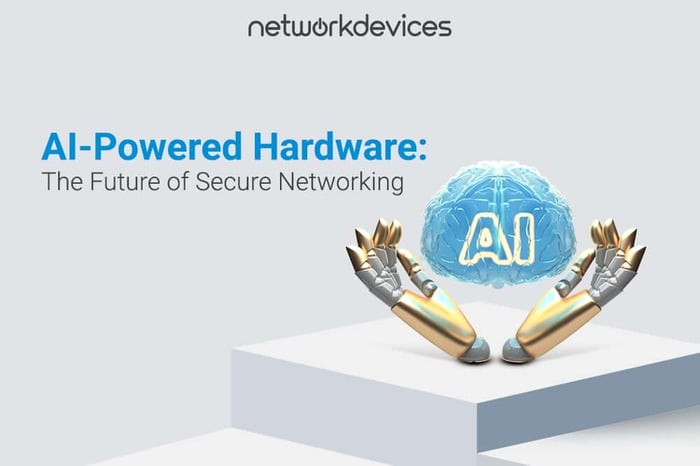
Artificial intelligence is now a core component of network security hardware. Traditional, rule-based systems are being replaced by AI-powered appliances that detect threats in real time, respond autonomously, and continuously learn from network behavior.
Examples of AI-Driven Security Innovations:
- AI-powered firewalls that adapt policies based on behavioral analysis.
- Automated threat detection to identify and neutralize threats before they escalate.
- Zero Trust architecture hardware that enforces access using AI-driven identity verification.
These capabilities lay the foundation for autonomous security operations, reducing manual intervention and increasing responsiveness in dynamic threat environments.
High-End Data Centers: The Backbone of AI Integration
The rise of AI workloads has turned high-end data centers into mission-critical infrastructure. These facilities house the computing power required to train models, process massive data sets, and support advanced network automation.
Core Components of AI-Optimized Data Centers:
- GPU and TPU acceleration for AI: Enables efficient handling of deep learning and real-time analytics.
- Ultra-low latency networking: Supports seamless data exchange and responsive threat mitigation.
- Hybrid cloud integration: Combines on-premises control with the scalability of cloud services.
Modern security appliances rely heavily on these high-performance environments to deliver AI-driven networking solutions on a scale.
The Impact of AI on Data Center Spending
AI is not just reshaping infrastructure; it’s reshaping budgets. A Dell’Oro Group forecast projects global data center CapEx will grow from $430 billion in 2024 to $1.1 trillion by 2029, driven largely by AI integration.
Spending Trends:
- Enterprises will spend 35% of their data center CapEx in 2024 on AI-optimized accelerated servers—up from 15% in 2023.
- That figure is expected to reach 41% by 2029.
- Hyperscalers like Amazon, Google, Meta, and Microsoft already dedicate 40% of their budgets to AI-ready servers.
- High-end servers equipped with Nvidia chips can cost between $100,000 and $200,000 each.
- This investment reflects the strategic priority of scalable, AI-driven infrastructure across industries.
The Shift to Software-Defined, Cloud-Integrated Hardware
Traditional fixed-function hardware is giving way to flexible, software-defined platforms that support remote management, on-demand scaling, and AI-based optimization.
Emerging Trends:
- Network Function Virtualization (NFV) replaces legacy appliances with software-defined services.
- Cloud-managed security appliances centralize control of distributed environments.
- Self-healing networks utilize AI to detect and resolve issues autonomously, eliminating the need for human intervention.
These trends are making cloud-integrated hardware appliances a foundation of secure, efficient network operations.
Why Hardware Still Matters in a Software-Defined World
While virtualization dominates many IT strategies, specialized hardware continues to offer advantages in performance, compliance, and edge processing.
Key Reasons Hardware Remains Essential:
- Low-latency performance: ASICs, FPGAs, and TPUs outperform software-only systems for real-time workloads.
- Regulatory compliance: On-premise security appliances are necessary in finance, healthcare, and government sectors to meet data sovereignty requirements.
- Edge computing: As IoT and 5G expand, local processing power is needed to reduce latency and bandwidth costs.
- Quantum-safe security hardware: Emerging solutions will protect against threats of the quantum era.
Far from obsolete, AI hardware appliances are evolving to meet the challenges of the next generation.
Where Legacy Hardware Is Declining
Not all hardware will survive the shift. Older, rigid appliances are being replaced by virtualized, cloud-native, and software-defined alternatives.
Declining Technologies:
Standalone firewalls and VPNs are being replaced by SASE (Secure Access Service Edge) and ZTNA (Zero Trust Network Access).
Legacy switches and routers are being phased out in favor of SDN and VNFs (Virtualized Network Functions).
The trend is clear: flexibility, automation, and AI integration are the future of network infrastructure.
Conclusion: Intelligent Infrastructure Is the Future
AI-powered hardware appliances are transforming secure networking from the ground up. With AI at the core, these systems deliver faster responses, deeper insights, and scalable performance across data centers, cloud environments, and the network edge.
As organizations seek agility without compromising security or compliance, the most effective solutions will blend hardware acceleration, software-defined control, and AI automation. Hardware isn't disappearing, it’s getting smarter.
FAQ
What are AI-powered hardware appliances?
They are intelligent devices that utilize artificial intelligence to automate, secure, and optimize network operations in real-time.
Why is AI important in network security?
AI enables faster, autonomous threat detection and mitigation, thereby reducing the time between an attack and a response.
Will traditional network hardware become obsolete?
Not entirely—some legacy systems are being replaced, but hardware remains critical for performance, compliance, and edge deployments.
What role do data centers play in AI-driven networking?
They provide the compute and networking backbone needed to process AI workloads efficiently and at scale.