
Key Takeaways
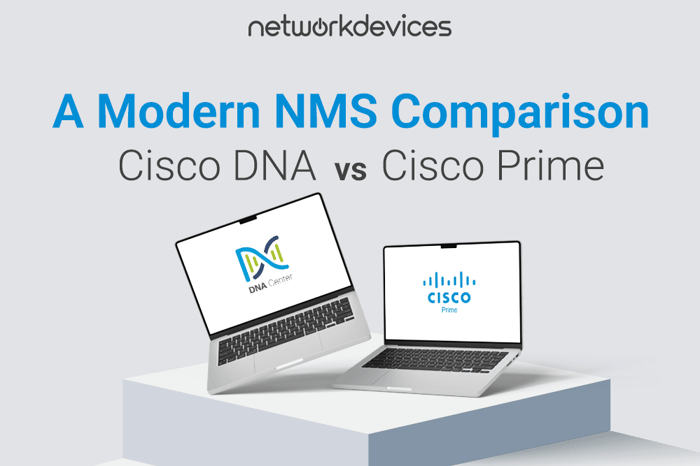
✅ Cisco DNA Center is the clear successor to Prime Infrastructure for modern campus networks.
❌ Cisco Prime Infrastructure is in its end-of-life phase and lacks support for intent-based automation, Zero Trust security, and extensibility.
This article provides a side-by-side feature comparison, migration guidance, and use-case analysis to help IT teams confidently modernize their systems.
Introduction
For IT teams evaluating campus NMS platforms, the verdict is in: Cisco DNA Center is the definitive choice over its predecessor, Cisco Prime Infrastructure. While Prime served networks reliably for years, its end-of-sale in 2023 and upcoming end-of-support in 2028 mark a necessary evolution toward a more intelligent, automated platform.
This is not just a product upgrade—it’s a shift in how network management is approached. Cisco DNA Center, now branded as Cisco Catalyst Center, introduces intent-based automation, predictive analytics, integrated security, and API extensibility that Prime simply wasn’t designed to handle.
In this guide, we will:
- Summarize the goals of each platform
- Compare key features in a clear table
- Explain the PDART migration tool
- Help you determine which NMS fits your infrastructure needs
By the end, you'll have a clear understanding of why Cisco DNA Center is the modern choice for campus network management and how to plan your migration with confidence.
What is Cisco Prime Infrastructure?
Cisco Prime Infrastructure is a legacy network management system designed to help IT teams unify the management of wired and wireless infrastructure through a GUI-based interface. It replaced fragmented tools like CiscoWorks and the Wireless Control System (WCS), becoming a centralized hub for lifecycle management.
Core Objectives and Limitations
- Centralized control across all network devices
- Simplify operations with workflow tools
- Enable visibility into device health and performance
- Support compliance and reporting
At the time, it addressed static environments well. However, modern IT environments are dynamic, software-defined, and security-first, challenges for which Prime was not built.
Cisco Prime End-of-Life (EoL) Timeline
- Series Release Date: January 29, 2012
- End-of-Sale: September 29, 2023
- End-of-Support: September 30, 2028
You can find official end-of-life documentation on the Cisco Prime Infrastructure EOL reference page.
The Core Shift to Intent-Based Networking (IBN)
Intent-Based Networking enables administrators to define high-level outcomes, which the system translates into automated policies and actions. Rather than manually configuring individual devices, IT teams express business goals, and the network handles enforcement.
Benefits include:
- Faster deployment with fewer errors
- Real-time adaptation to changes
- Continuous assurance and optimization
DNA Center is the platform that delivers this transformation on a scale.
What is Cisco DNA Center (Catalyst Center)?
Cisco DNA Center is the modern command hub for network operations. It integrates automation, AI/ML-driven analytics, security policy, and real-time telemetry in a single platform. With its rebrand as Cisco Catalyst Center, the platform retains all functionality and expands Cisco's IBN vision.
Key Advantages: Automation, Analytics, and Security
- Enable Intent-Based Networking: Define goals like "prioritize video calls," and the system enforces them automatically.
- Automate Lifecycle Management: Automate zero-touch provisioning, software updates, and policy enforcement.
- Deliver AI-Driven Assurance: Monitor performance, detect anomalies, and provide actionable insights.
- Strengthen Security: Integrate with Cisco ISE and TrustSec to enable Zero Trust segmentation.
- Unify Operations: Combine provisioning, policy, assurance, and telemetry into one GUI.
- Support Hybrid IT: Extend policies across branches, data centers, and cloud environments to ensure seamless integration and consistent management.
For more details on the rebranded platform and its full feature set, visit the official Cisco Catalyst Center overview.
Understanding DNA Center Licensing and Deployment
Before we dive into licensing, it’s great to start with an overview of suites and tiers. A suite is a collection of software tools designed for a specific purpose. In this context, a Cisco DNA Software suite is a handy package of tools for managing various aspects of a network. You can think of a suite as a well-organized toolbox designed for a specific purpose. There are three suites to explore:
- Switching: For managing LAN switches.
- Wireless: For managing wireless access points and controllers.
- SD-WAN and Routing: For managing routers and wide-area networks.
A tier represents a level of features or capabilities within a suite. For instance, if you go with the Wireless suite, you can easily choose the number of features you’d like by selecting a tier:
- Essentials: Foundational capabilities for basic operations
- Advantage: Advanced features including automation and analytics
- Expansion Pack: You can effortlessly purchase additional Cisco subscriptions, appliances, and services alongside a Cisco DNA Essentials or Advantage license, all through one handy ordering menu! This is available for various options, including Cisco Identity Services Engine, Cisco Secure Network Analytics, Cisco Spaces, and the Cisco ThousandEyes solution.
Deployment Options
Cisco DNA Center provides flexible deployment choices. Organizations can run it on a dedicated hardware appliance or as a virtual instance compatible with platforms like VMware ESXi or AWS.
| SKU | Model Type | Hardware Platform | Core Count | Deployment Type |
| DN-SW-APL | Virtual Appliance | - | - | Software only (VM) |
| DN3-HW-APL | Hardware Appliance | Cisco UCS C220 M6 | 32 cores | Physical Appliance |
| DN3-HW-APL-L | Large Hardware Appliance | Cisco UCS C220 M6 | 56 cores | Physical Appliance |
| DN3-HW-APL-XL | Extra-Large Appliance | Cisco UCS C240 M6 | 80 cores | Physical Appliance |
Swipe left to see more →
Understanding Cisco DNA SKU Prefixes
| SKU Prefix | Meaning |
| DNA | Cisco Digital Network Architecture |
| DNA3 | DNA software license for Enterprise Networking, version 3 |
| SW | Software |
| HW | Hardware |
| APL | Appliance |
| L | Large |
| XL | Extra Large |
Swipe left to see more
Feature Comparison: Cisco DNA Center vs. Prime Infrastructure
| Feature/Capability | Cisco Prime Infrastructure | Cisco DNA Center |
| Platform Type | Traditional NMS | Intent-Based Networking Platform |
| Deployment Model | On-premises virtual appliance | On-premises appliance (Physical or Virtual) |
| User Interface | Legacy web interface | Modern GUI with real-time telemetry |
| Network Scope | Wired and wireless (campus, WAN, branch) | Wired, wireless, SD-Access, segmentation |
| Automation | Limited template-based automation | Full lifecycle automation |
| Policy Management | Device-level templates | Role-based, intent-driven policies |
| Assurance & Analytics | Basic monitoring | AI/ML insights and predictive analytics |
| Software Image Management | Supported | Automated compliance and rollback |
| Security Integration | Minimal | Deep integration with ISE, TrustSec |
| Zero Trust / Segmentation | Not supported | Native SD-Access segmentation |
| Integration & Extensibility | Limited | Open APIs and ITSM tool integration |
| App Visibility | Not available | End-to-end app experience metrics |
| Licensing Model | Perpetual or subscription | Subscription (Essentials, Advantage) |
| Support Lifecycle | EOS Sep 29, 2023 EoSpt Sep 30, 2028 | Active development |
| Target Environment | Campus and branch networks | Intent-based digital campuses |
Swipe left to see more
Migration Path: From Prime to DNA Center
We understand that Cisco Prime Infrastructure is approaching its end, and organizations should start preparing to transition to Cisco DNA Center. Cisco has rolled out the PDART Tool, a helpful resource for smoothing this journey.
PDART Capabilities:
- Device Compatibility Check: Lists which Prime-managed devices are supported in DNA Center.
- Feature Mapping: Shows equivalent DNA Center capabilities.
- Software Readiness: Highlights necessary firmware upgrades.
- Scalability Sizing: Recommends appropriate DNA appliance size.
For technical guidance and access to tools, refer to the Cisco PDART migration tool documentation.
PDART gives you a data-driven migration plan, identifying gaps and required actions.
The Verdict: Which Network Management System Should You Choose?
Cisco DNA Center is the clear successor to Cisco Prime Infrastructure for managing modern campus networks. While Prime served reliably in traditional environments, it lacks the automation, analytics, and Zero Trust capabilities required today.
DNA Center offers a fully integrated platform with intent-based networking, AI-driven assurance, and policy-based automation. It is well-suited for organizations undergoing digital transformation.
If you're preparing for a Prime-to-DNA migration, Cisco's PDART tool offers a clear upgrade path. The transition is not just an enhancement—it is a strategic step toward a smarter, more secure network.
In summary: Prime is legacy, DNA Center is future-ready.
Recommended Use Cases
| Scenario | Recommended NMS |
| Legacy campus with limited change | Cisco Prime (short term) |
| Hybrid/cloud-ready network strategy | Cisco DNA Center |
| Need for automation and segmentation | Cisco DNA Center |
| Zero Trust and AI-based assurance | Cisco DNA Center |
Next Steps and Resources
Ready to future-proof your network infrastructure?
➡️ Browse our Cisco network hardware catalogue
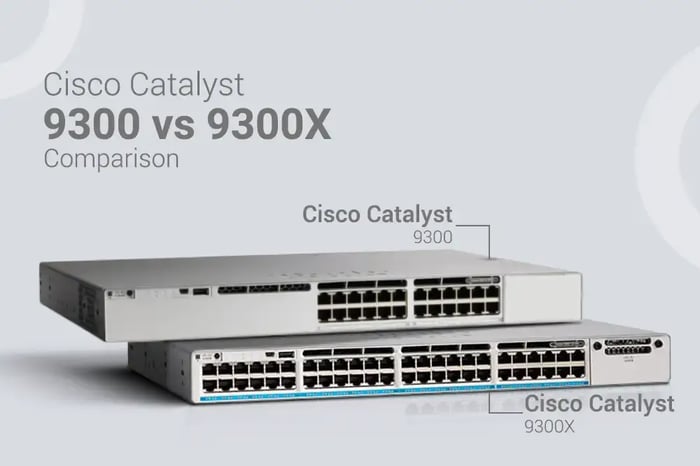
➡️ Compare Cisco Catalyst 9300 vs 9300X switches
➡️ Understand Cisco DNA Essentials vs Advantage licensing tiers